Porsche 911 GT3 R (992)
Porsche Motorsport
The Pinnacle of Rear-Engine Engineering
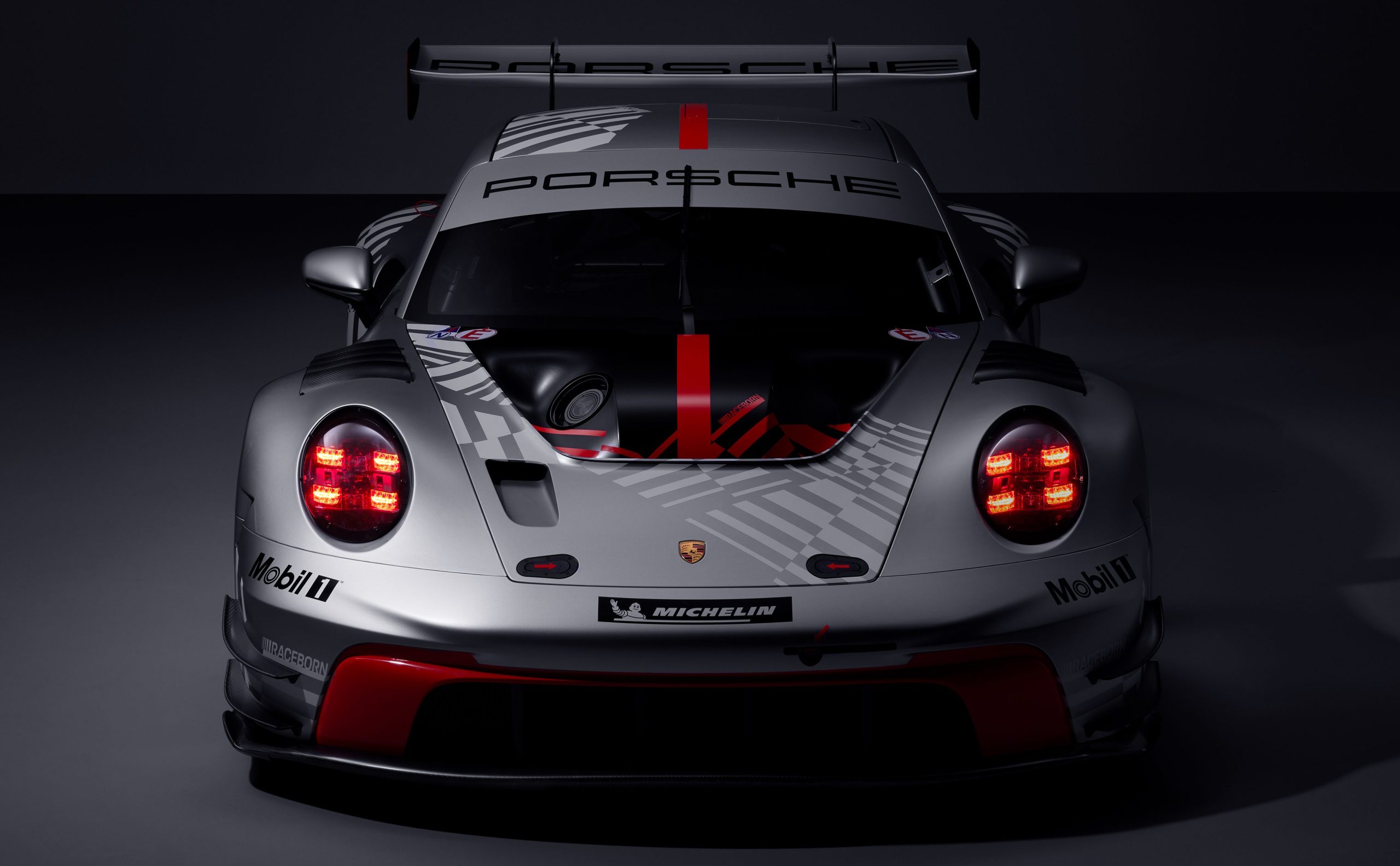
The Porsche 911 GT3 R, based on the 992-generation chassis, represents the latest evolution of the most prolific customer racing platform in motorsport history. Engineered in Weissach, this vehicle replaces the highly successful 991.2 generation and serves as the benchmark for the FIA GT3 category. It is campaigned globally by elite factory-supported squads and privateer teams across the most demanding series in the world, including the FIA World Endurance Championship (WEC), the IMSA WeatherTech SportsCar Championship, and the Intercontinental GT Challenge.
At the heart of the 992-generation GT3 R is a heavily refined, naturally aspirated flat-six engine. Porsche engineers increased the displacement from 4.0 to 4.2 liters, not necessarily to chase peak horsepower—which is strictly governed by Balance of Performance (BoP) regulations—but to drastically widen the powerband. This optimization delivers a much richer torque curve at lower RPMs, providing drivers with explosive, predictable acceleration out of slow-speed corners where the rear-engine weight bias already provides a massive traction advantage.
Aerodynamically, the vehicle utilizes a highly evolved carbon-fiber body structure designed to maximize downforce without increasing drag. The most critical structural upgrade is the implementation of a double-wishbone front suspension layout, departing from the classic MacPherson strut setup. This change allows the car to maintain a perfectly stable aerodynamic platform under heavy braking, utilizing a raised underbody and a massive swan-neck rear wing to keep the chassis planted at high speeds.
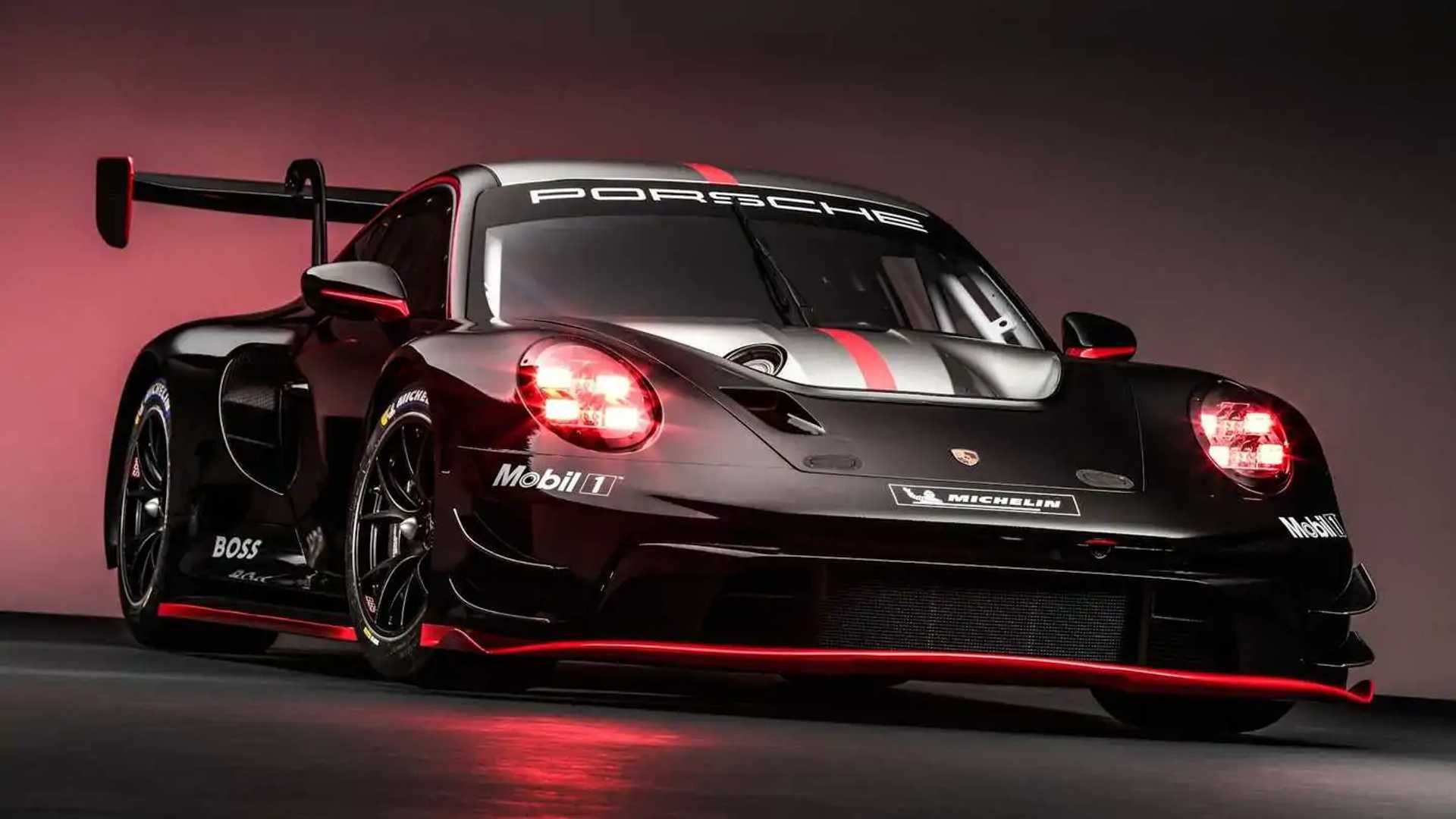
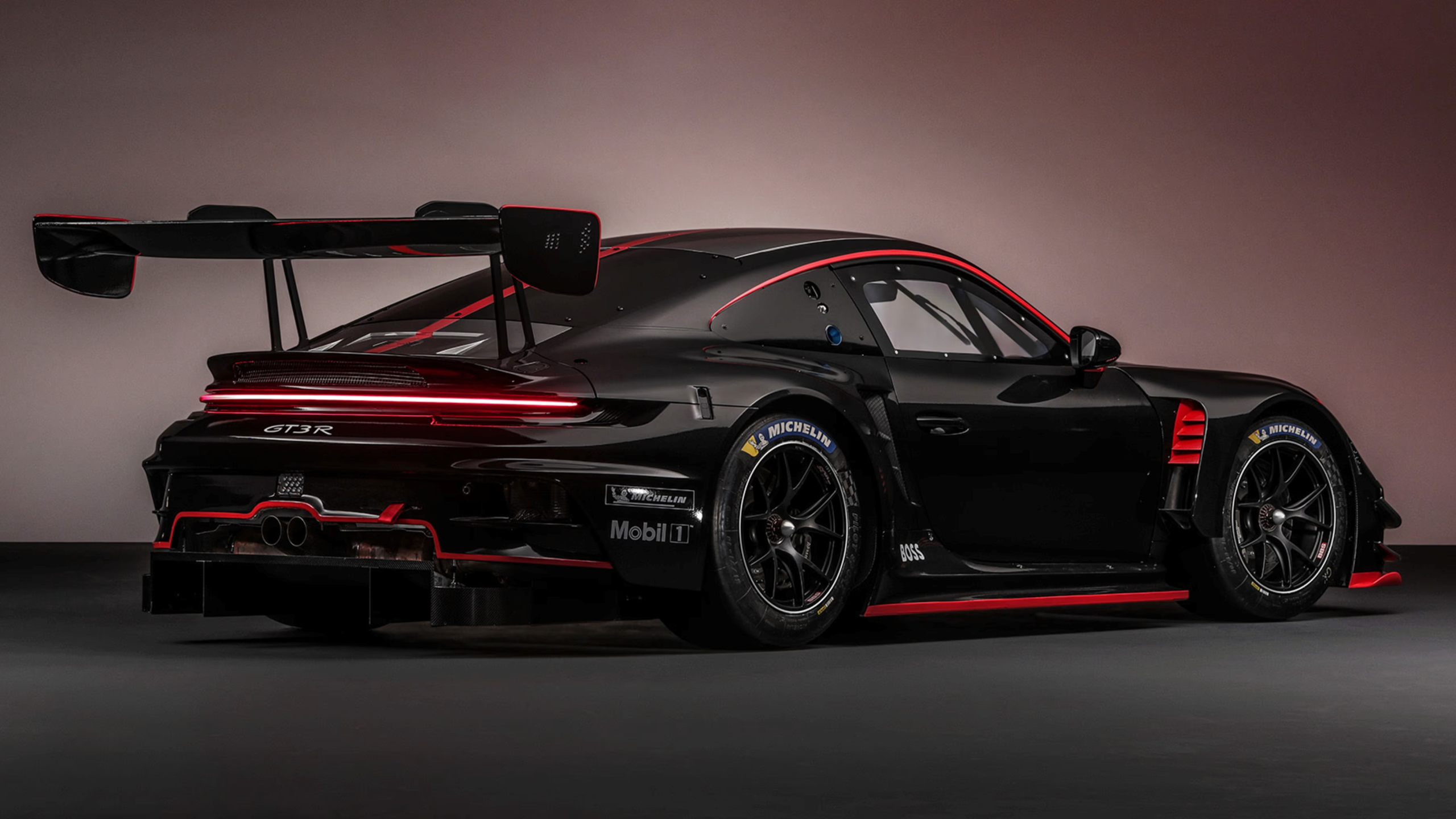
Beneath the composite exterior, the 911 GT3 R was specifically engineered to be more forgiving for Pro-Am driver pairings. Recognizing that ultimate lap times mean nothing if an amateur driver cannot safely push the car to the limit, Porsche shifted the aerodynamic balance slightly forward to cure the 911’s historical tendency toward mid-corner understeer. Paired with state-of-the-art, multi-stage traction control and ABS systems, the 992 generation offers an incredibly wide setup window for grueling 24-hour endurance events.
4.2
Liter Flat-Six Engine
The naturally aspirated powerplant was enlarged to optimize the torque curve, delivering smoother, more accessible power delivery across the entire rev range for better driveability.
992
Chassis Architecture
Based on the latest production generation of the 911, the GT3 R features a widened track and a highly rigid aluminum-steel composite construction for maximum safety and response.
Double
Wishbone Front Axle
Replacing the traditional MacPherson strut, this complex suspension layout dramatically improves front-end mechanical grip and aerodynamic pitch control under heavy braking.
Graphic Application
The Rear-Engine Canvas
The visual identity of the 911 GT3 R is defined by one of the most recognizable silhouettes in automotive history. Unlike the sharply segmented, wedge-shaped profiles of its mid-engine competitors, the Porsche features a continuous, teardrop-like greenhouse that flows seamlessly into massive, widened rear fenders. This sweeping, uninterrupted aerodynamic surface serves as a highly dynamic canvas for motorsport graphic design, naturally favoring sweeping horizontal lines and continuous color gradients that accentuate the car’s airflow.
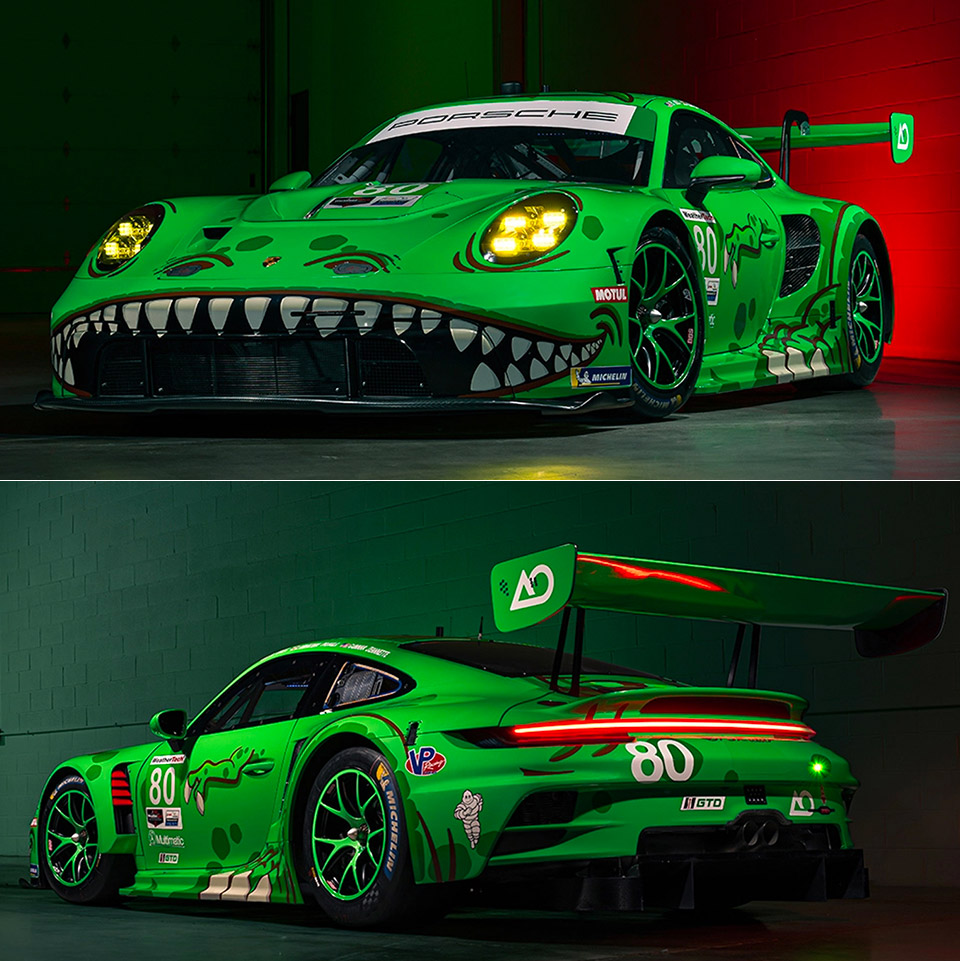
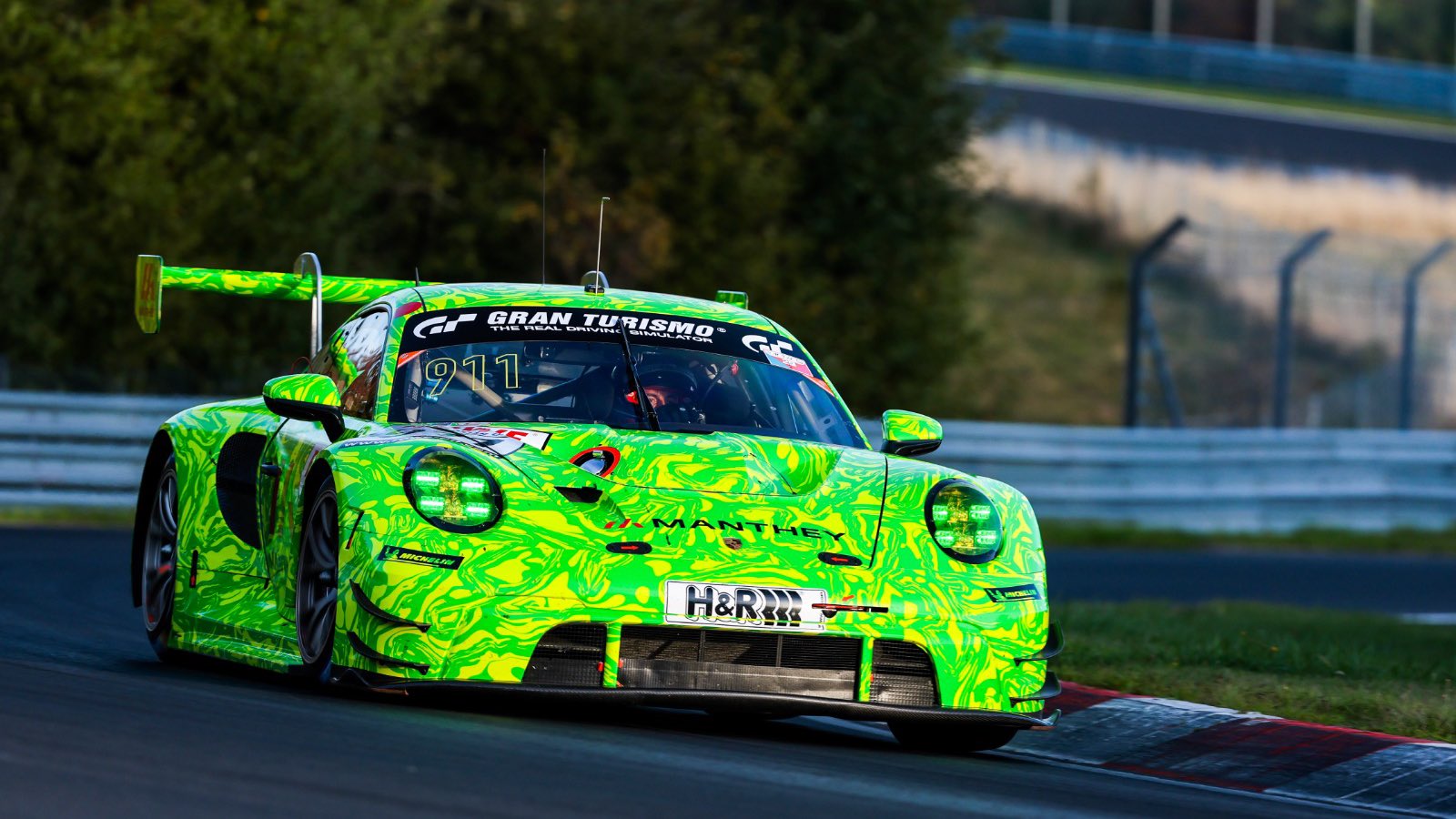
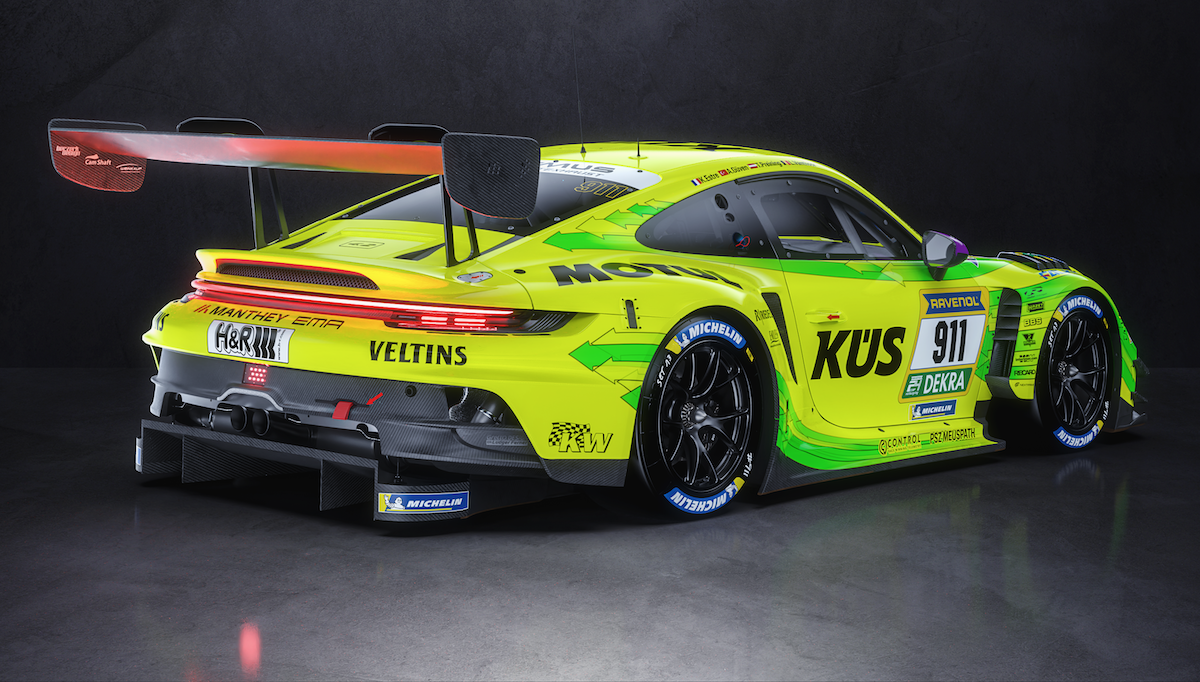
Because of this smooth, iconic shape, the 911 is frequently the subject of the most beloved and creative liveries on the global grid. The expansive, uninterrupted surface of the hood and the heavily flared rear arches provide a perfect, flowing canvas for designers to stretch their imaginations. Teams constantly leverage the car’s curves for both highly modern geometric wraps and brilliant heritage throwbacks. Prominent examples include the blinding neon yellow and green of Manthey Racing’s “Grello,” modern reinterpretations of the famous “Thick Cuts” butcher map (an homage to the legendary 1971 Pink Pig), and AO Racing’s incredibly popular “Rexy” dinosaur livery.
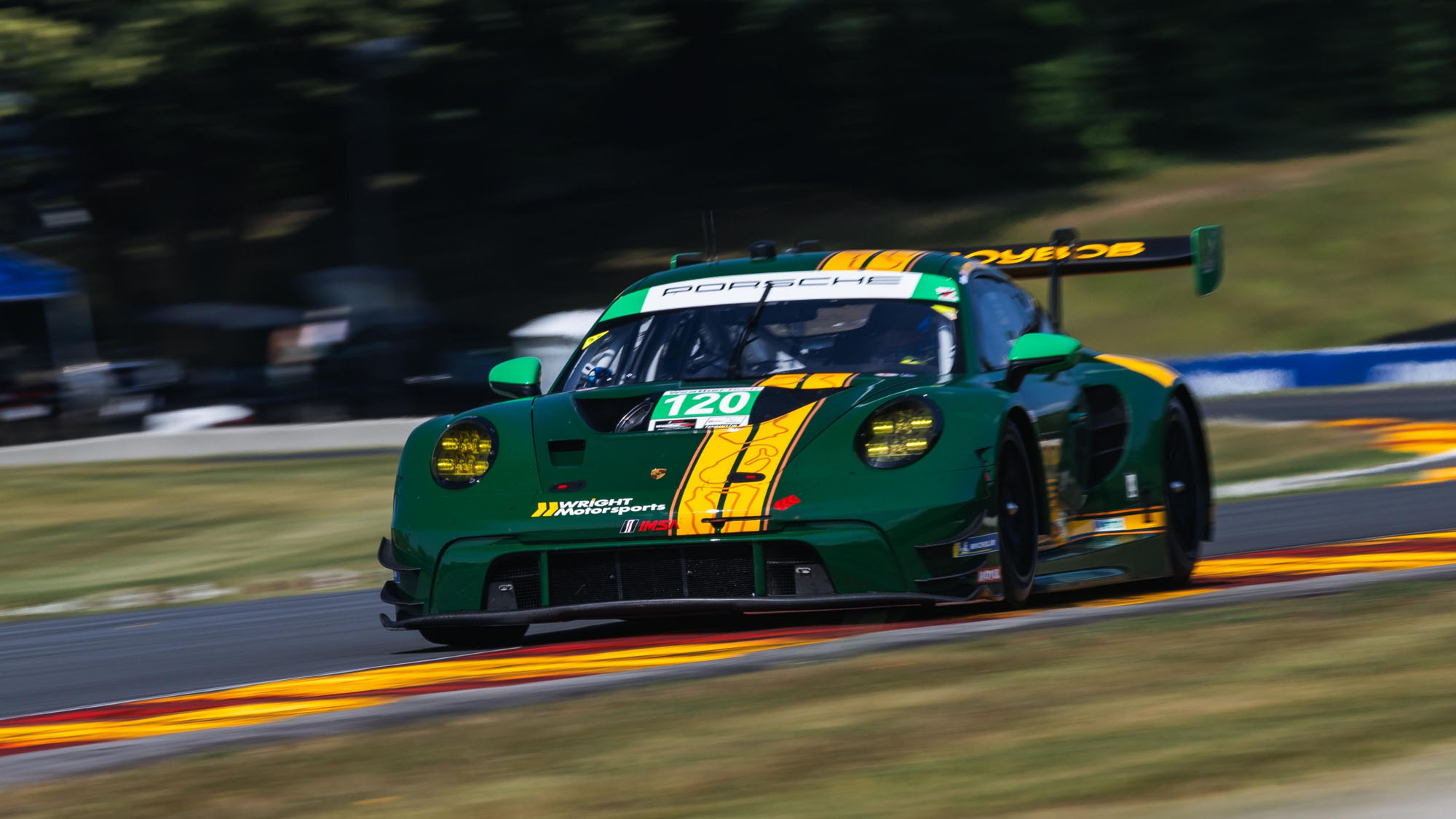
Applying these graphics, however, requires extreme precision from wrap designers. The massive, expanded rear quarter panels and deep air extractors behind the front wheels create complex compound curves. Designers must carefully map and stretch vinyl materials to ensure that critical sponsor branding and intricate livery details—like the dotted butcher lines of the Thick Cuts wrap—do not warp or distort when transitioning across the carbon-fiber bodywork.

Fan-Favorite Identity
The “Rexy” Phenomenon
A prime example of the 911’s visual potential is AO Racing’s “Rexy” livery, which instantly became a global motorsport sensation. It is a masterclass in proving that a highly engineered, serious endurance machine can embrace a playful, character-driven identity while still maintaining an intimidating, highly competitive track presence.
✴
Utilizing a vibrant, high-contrast green base, the design transforms the aggressive front fascia of the GT3 R into a teeth-baring Tyrannosaurus Rex. It features incredible attention to detail, complete with illustrative scales, deep scratch marks across the doors, and tiny dinosaur arms painted directly onto the front fenders.
✴
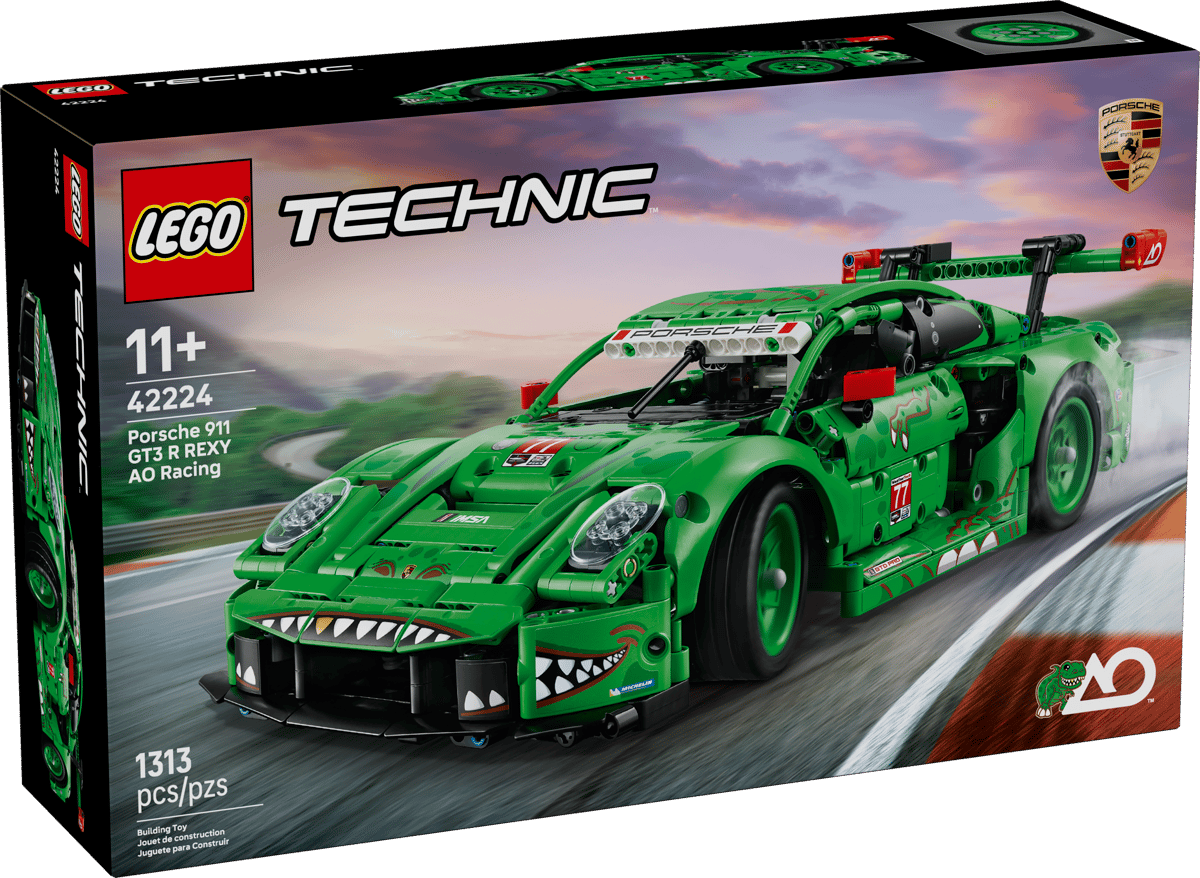
The popularity of the Rexy livery quickly transcended the standard racing paddocks, building a massive cult following among fans of all ages. The ultimate testament to this design’s cultural impact is its recent immortalization as an official 1,313-piece LEGO Technic set, highlighting the sheer marketing power of a perfectly executed motorsport livery.