Ferrari 296 GT3
Maranello Motorsport
A New Era of Ferrari Customer Racing
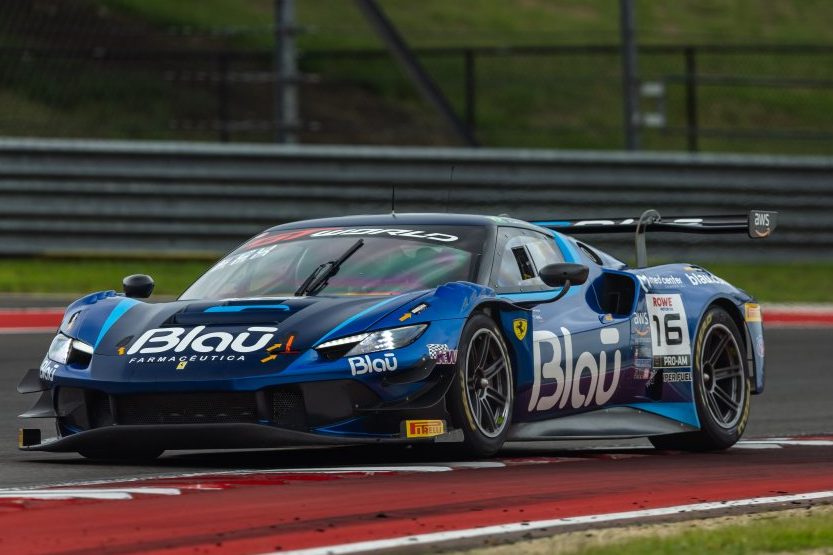
The Ferrari 296 GT3 represents a radical evolution in the Italian manufacturer’s storied customer racing program. Introduced as the direct successor to the monumentally successful 488 GT3, this vehicle was engineered from a blank sheet of paper to dominate the current era of FIA GT3 regulations. Rather than simply updating an existing platform, Ferrari and their chassis partner, Oreca, fundamentally rethought the car’s architecture to prioritize extreme serviceability, aerodynamic consistency, and Pro-Am driveability on the global stage.
✴
Return to V6 Heritage
At the core of the 296 GT3 is a major departure from its predecessor’s V8, returning to Ferrari’s legendary six-cylinder roots. It is powered by a mid-rear-mounted 3.0-liter twin-turbo V6, completely shedding the road car’s heavy hybrid system.
✴
“Hot V” Architecture
The engine utilizes a highly compact 120-degree configuration, positioning the turbochargers safely inside the vee of the block. This unique layout drastically lowers the center of gravity and improves overall chassis weight distribution.
✴
Rapid Serviceability
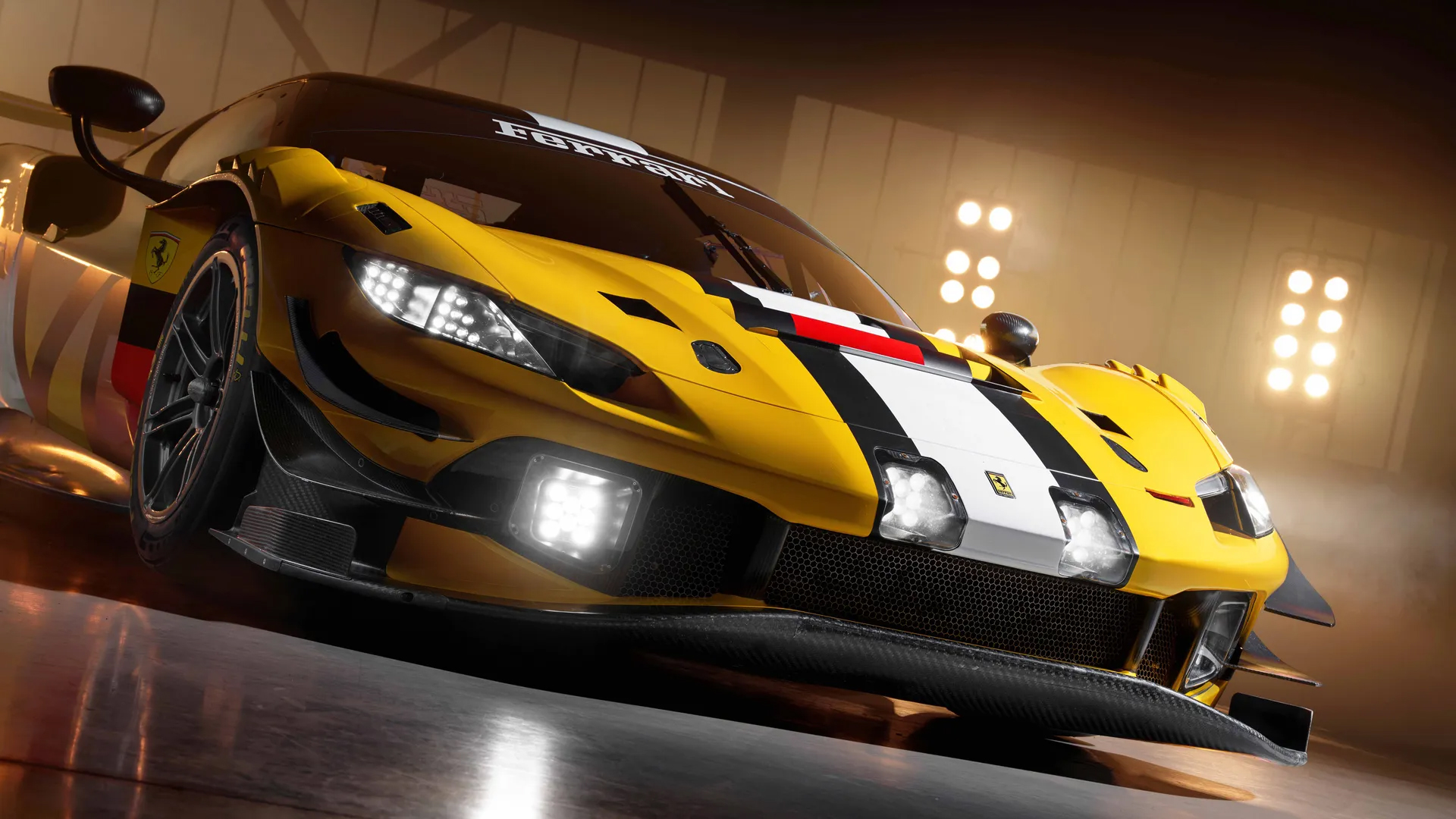
Engineered specifically for endurance racing, the chassis features a highly modular design. Both the front and rear bodywork, along with critical subframes, can be rapidly detached and swapped to save vital time during intense pit lane repairs.
Global Competitor
Dominating the Endurance Era
The 296 GT3 serves as Ferrari’s premier weapon in global endurance and sprint competitions. It is campaigned extensively by elite factory-supported squads and privateer Pro-Am teams across the world’s most demanding series, including the FIA World Endurance Championship (WEC), the IMSA WeatherTech SportsCar Championship, and the GT World Challenge. Entering a grid packed with heavily evolved machinery, the 296 had an immense legacy to live up to following the 488’s record-breaking win tally.
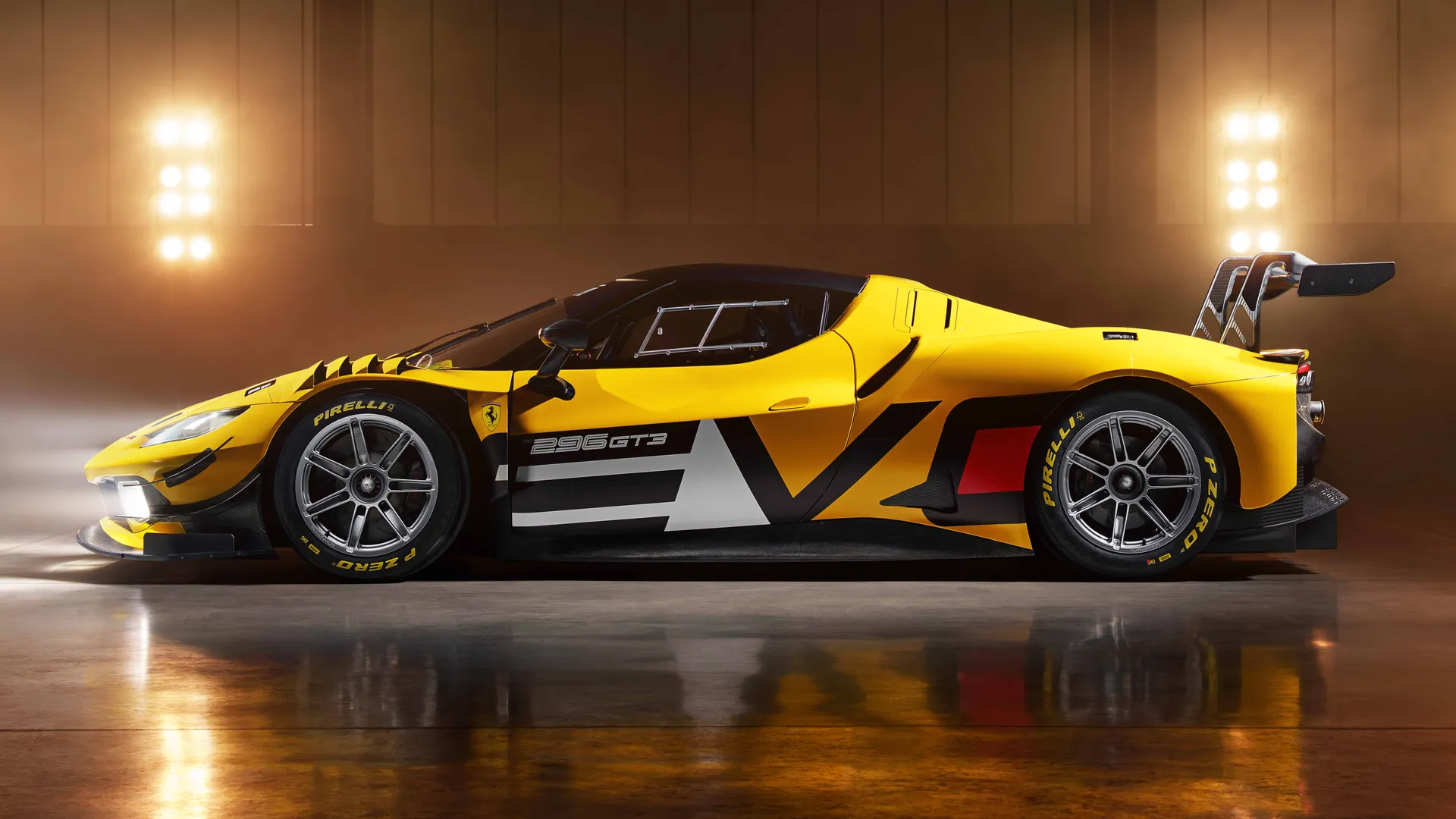
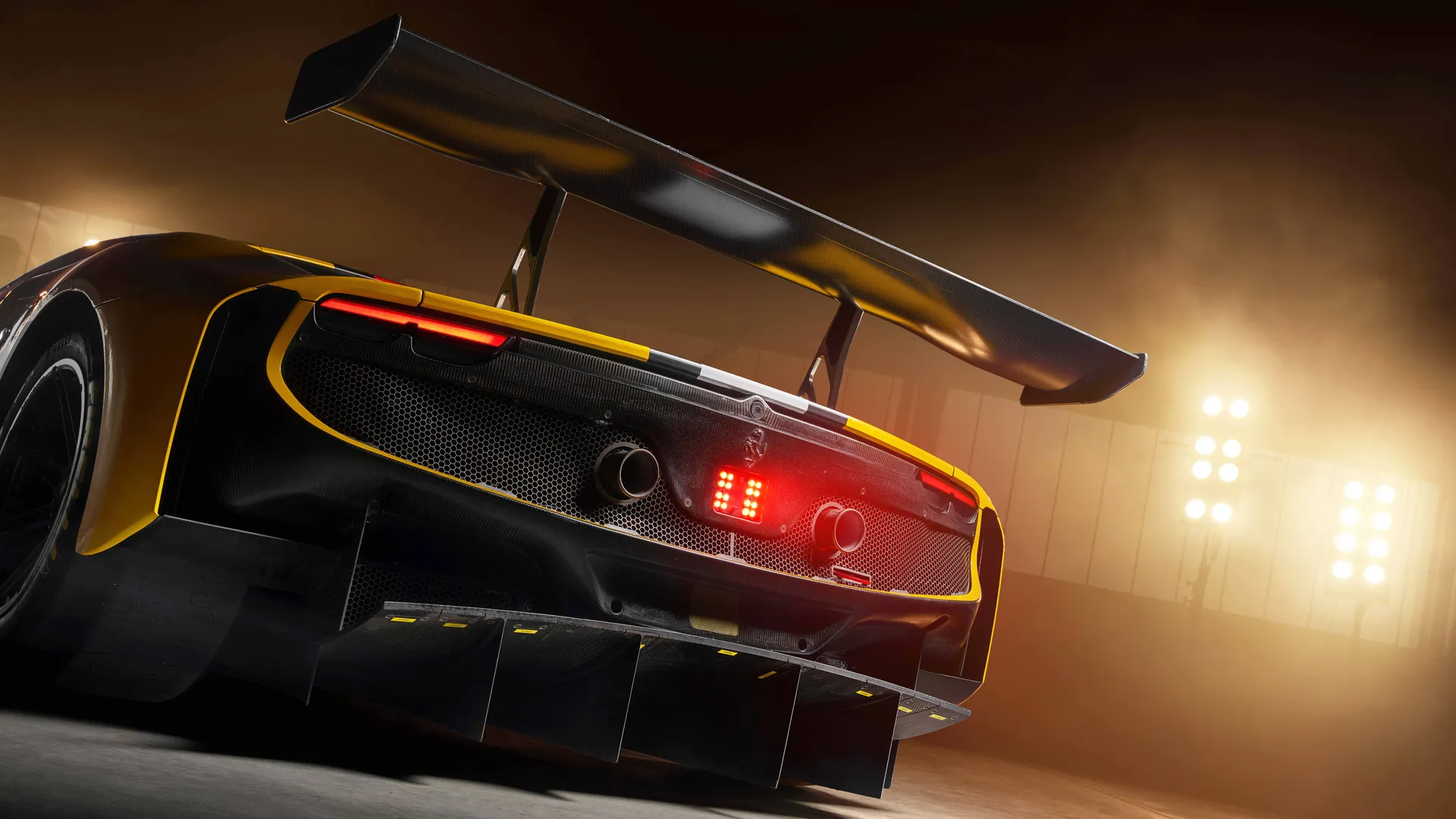
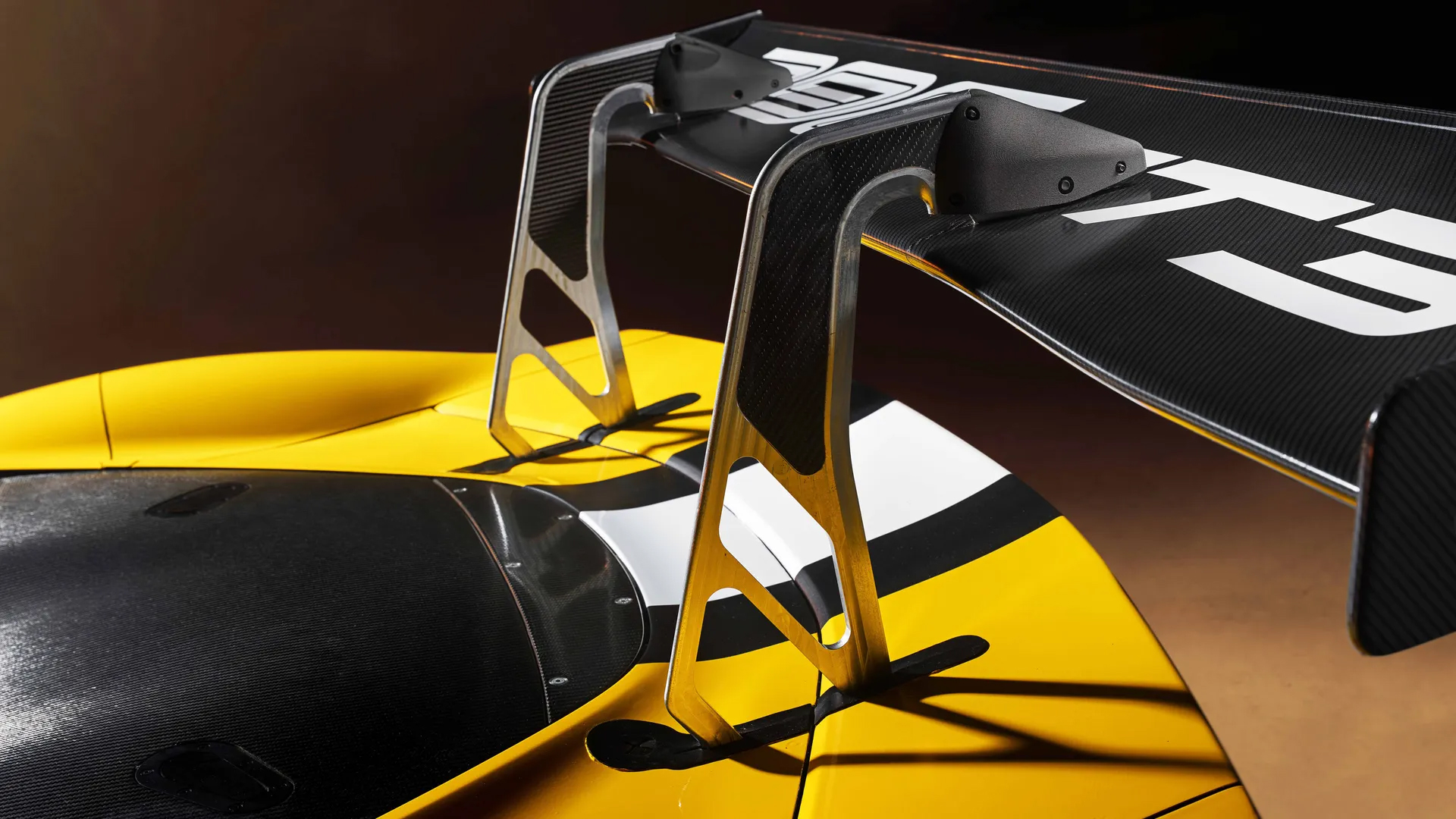
To achieve this, the engineering team heavily prioritized expanding the aerodynamic and mechanical operating window. Aerodynamically, the 296 GT3 produces approximately 20 percent more downforce than the outgoing 488 GT3. However, the most crucial improvement is that this downforce is significantly less sensitive to changes in ride height. A prominent front splitter, deep fender louvers, and a highly adjustable swan-neck rear wing work in unison to provide a stable, forgiving platform even as the car pitches heavily under braking.
This focus on a wider operating window caters directly to the amateur drivers who form the backbone of the GT3 category. Combined with a significantly refined, air-conditioned cockpit designed for better visibility and simplified ergonomics, the 296 is demonstrably less physically demanding to drive at the limit over the course of a grueling multi-hour stint.
The radical new V6 platform quickly silenced any doubts about its durability or pace by achieving historic victories early in its lifecycle. Most notably, it secured an overall win at the grueling 24 Hours of Nürburgring in 2023—a first for Ferrari—and followed it with a stunning class victory at the Rolex 24 at Daytona in 2024. These brutal endurance triumphs immediately validated the 296 GT3 as the new gold standard in customer sports car racing.
+20%
Increased Downforce
Aerodynamic efficiency is vastly improved over the outgoing 488 GT3, providing a highly stable platform that is far less sensitive to pitch under heavy braking.
Pro-Am
Optimized Cockpit
Designed specifically for gentlemen drivers, the refined ergonomics and advanced electronic aids make the car far less physically demanding during long endurance stints.
24
Hour Endurance Wins
The radical V6 platform quickly silenced any durability doubts by securing historic, grueling overall and class victories at both the famous Nürburgring and Daytona.
Visual Identity
Dressing the V6 Berlinetta
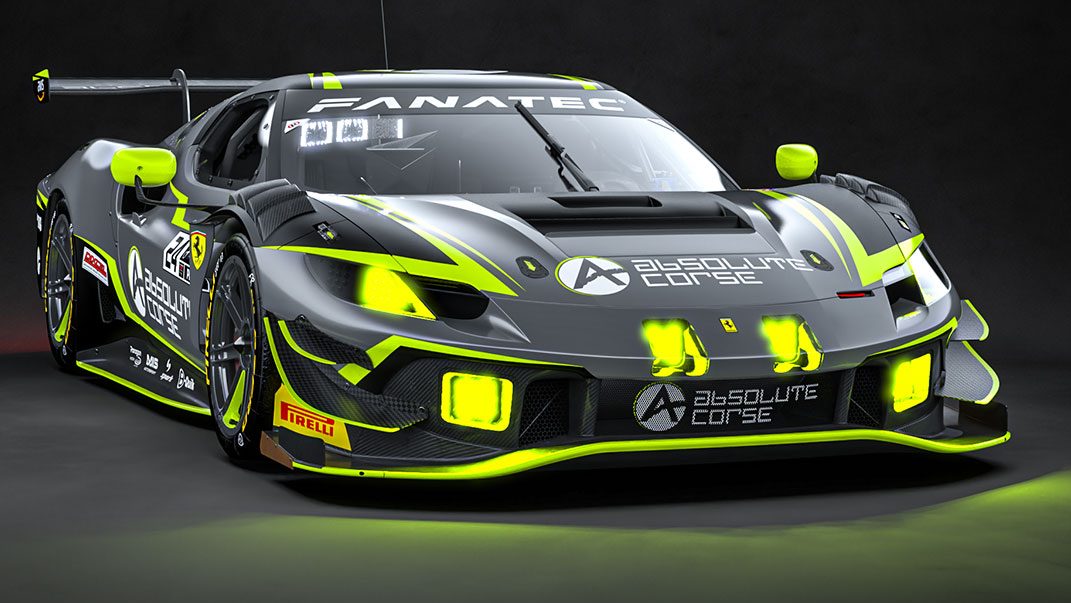
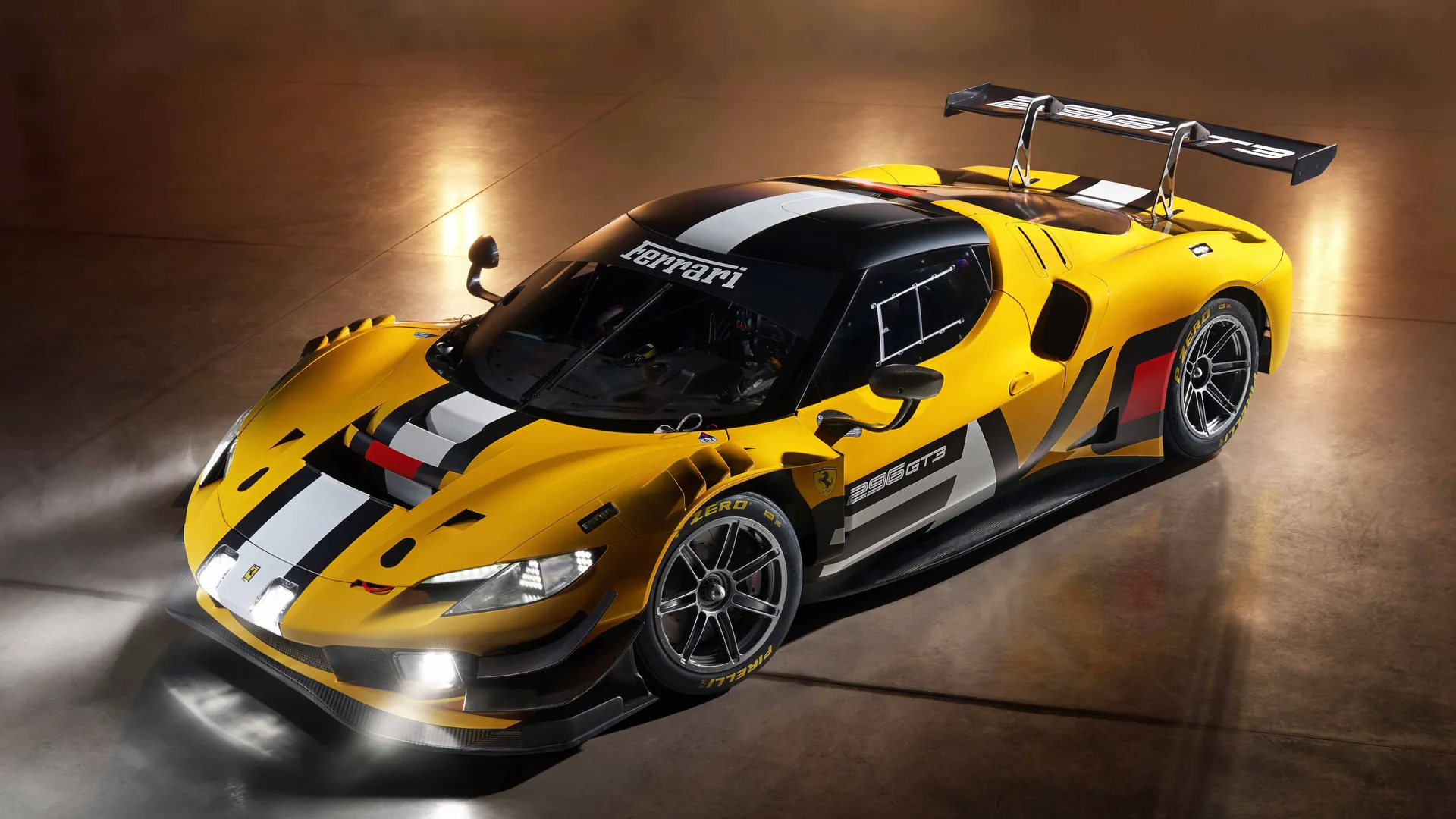
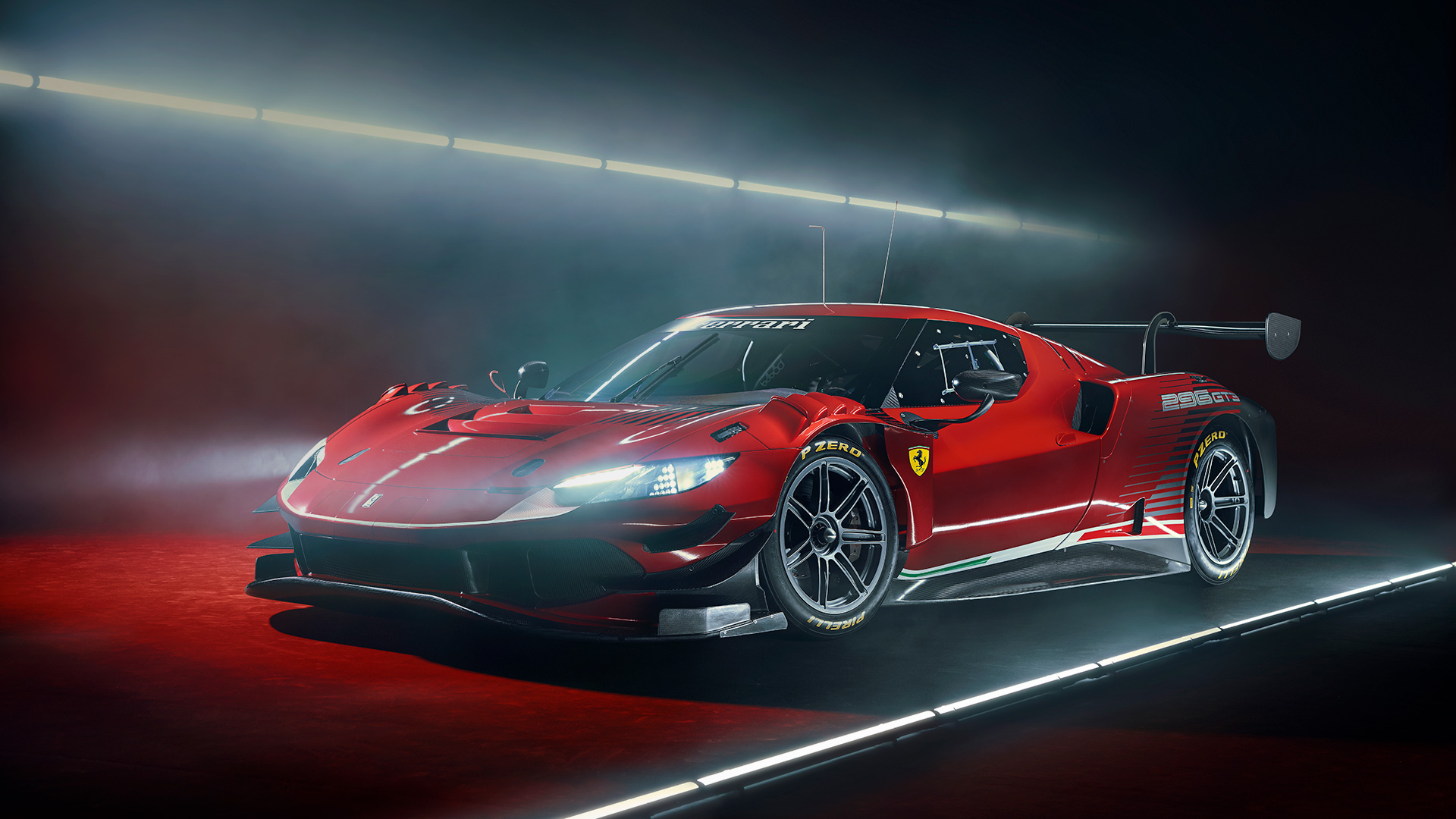
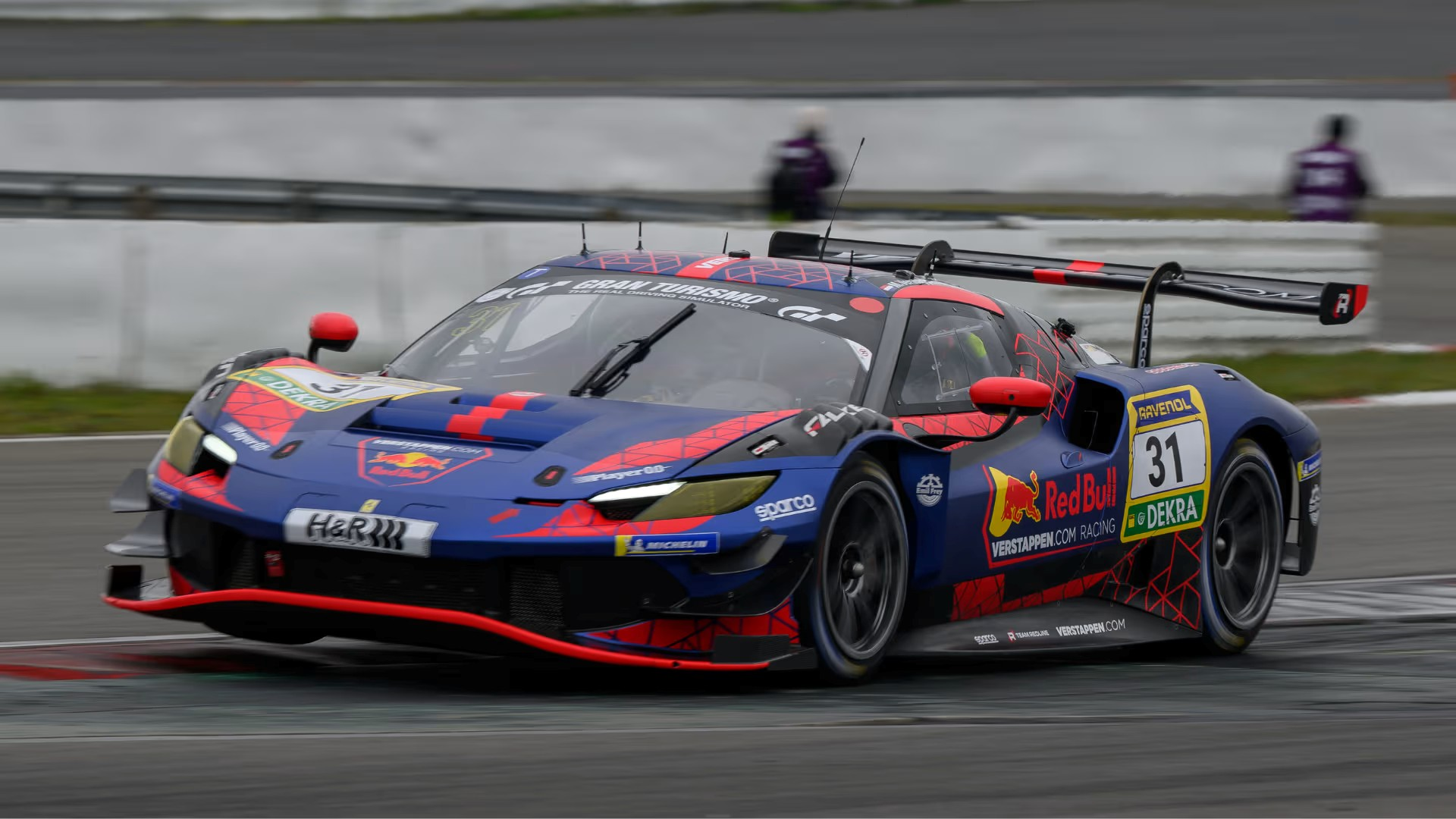
The physical architecture of the 296 GT3 provides one of the most elegant and fluid canvases on the global motorsport grid. Unlike the sharply creased, wedge-like profiles of its mid-engine competitors, the Ferrari retains the organic, sweeping lines of classic Italian berlinettas. The low, swooping nose channels air seamlessly over a teardrop-shaped glasshouse and into heavily pronounced rear haunches.
This continuous, uninterrupted aerodynamic surface dictates a very specific approach to motorsport graphic design. Rather than fighting harsh angles, successful livery designers favor sweeping color gradients and elongated lines that naturally follow the airflow of the bodywork. This allows the massive volume of customer entries to field an incredible variety of striking, dynamic visual identities.
✴
Because the vehicle lacks the disruptive, harsh body lines found on platforms like the Lamborghini Huracán or Corvette Z06, applying graphics is a highly fluid process. Intricate sponsor logos and complex geometric wraps remain perfectly undistorted across the car’s sweeping flanks.
✴
Teams like AF Corse and Risi Competizione frequently utilize these smooth side panels and the massive rear wing to project a commanding, high-end presence. This perfectly matches the car’s premium engineering pedigree, making it instantly recognizable on any track.