The Hardware
Building the Ultimate Sim Racing Foundation
When stepping into the world of competitive sim racing, the sheer volume of hardware options can be overwhelming. Before worrying about the PC powering the simulation, you need to understand the mechanical components that actually connect you to the virtual track. A proper simulator is built from five core elements, each playing a critical role in how you interpret the vehicle’s behavior.
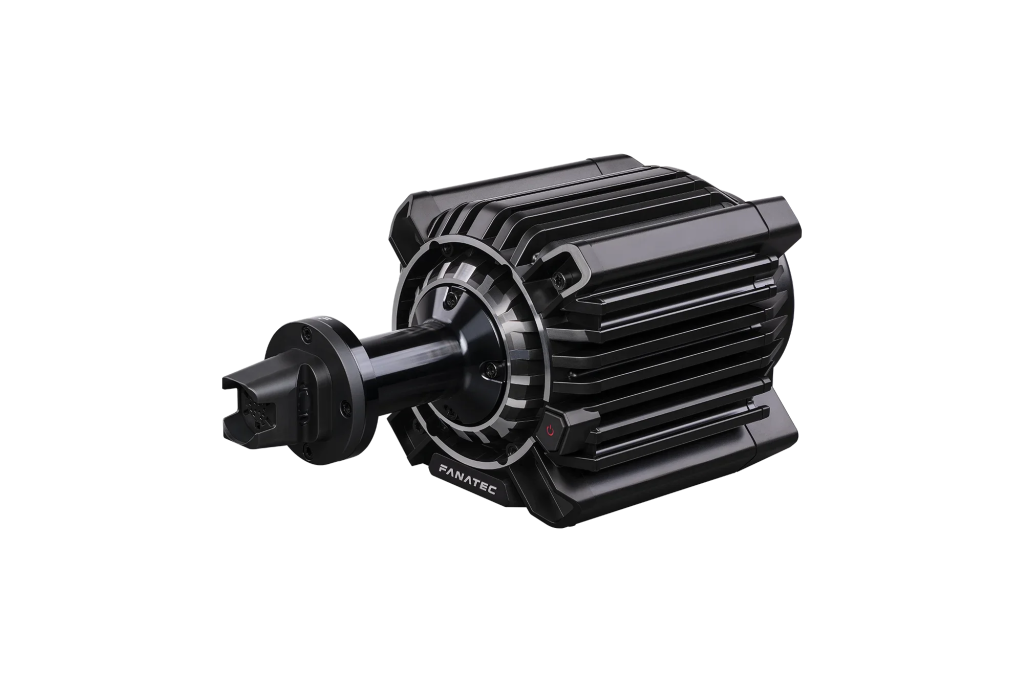
Force Feedback (FFB) Wheel Bases: This is the heart of your rig. The wheel base houses the motor that generates force feedback, translating the virtual physics of the car (tire grip, suspension loading, and track bumps) into physical resistance. Modern high-end setups utilize Direct Drive (DD) technology, where the steering wheel is mounted directly to a large industrial motor for zero-latency, highly detailed feedback.
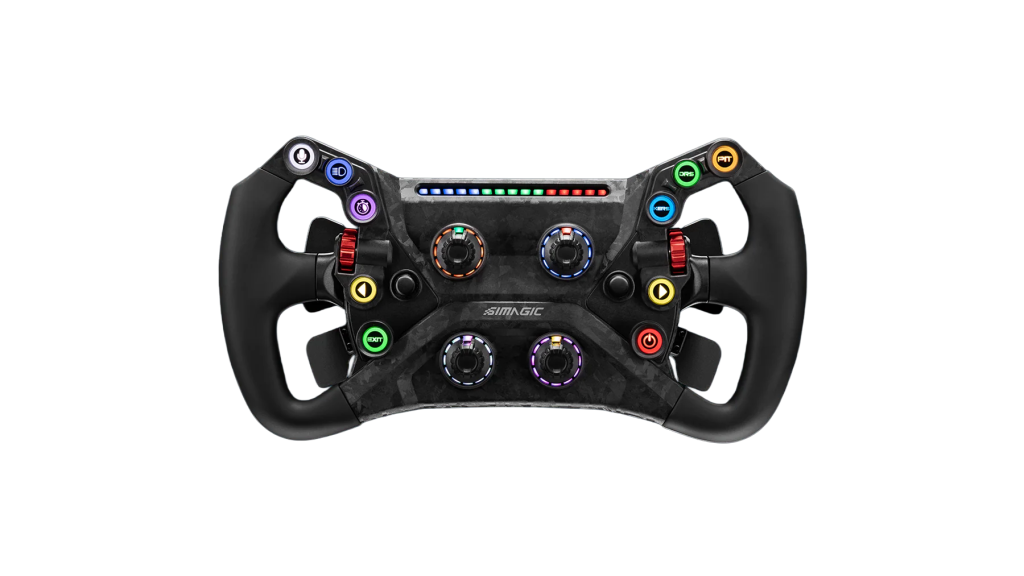
Steering Wheel: The wheel you hold dictates your control and immersion. GT3 and Formula racers typically use rectangular, yoke-style wheels packed with rotary encoders, buttons, and magnetic paddle shifters to adjust car settings on the fly.
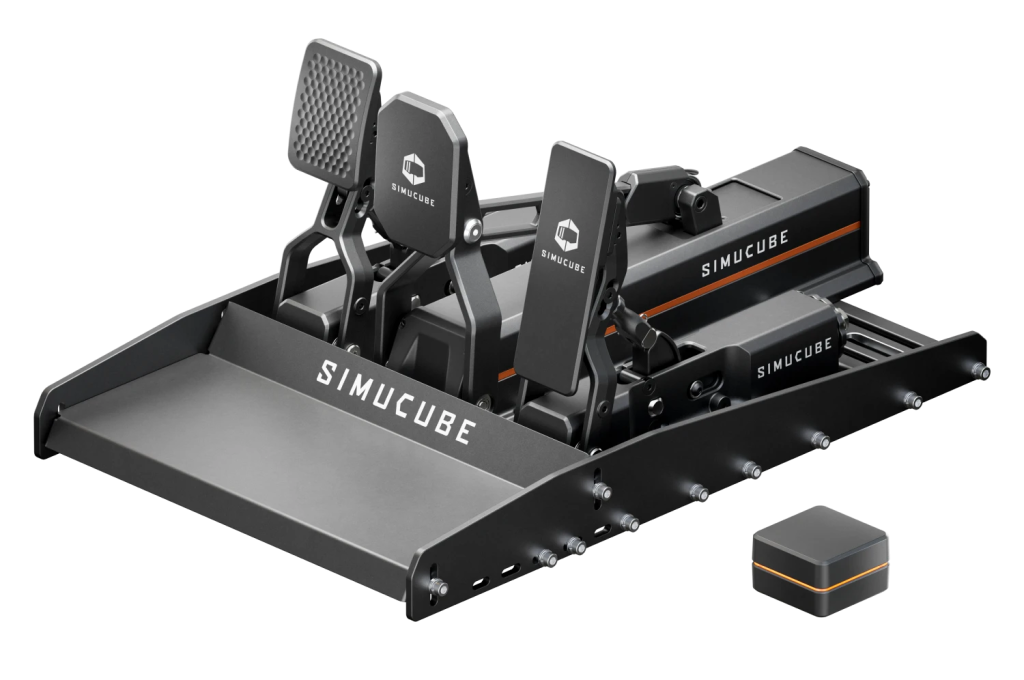
Pedals: Ask any professional sim racer, and they will tell you pedals are the most important upgrade for lowering lap times. High-end pedal sets utilize load-cell or hydraulic sensors that measure the pressure of your foot rather than the distance the pedal travels, allowing for incredibly consistent, muscle-memory-based braking.
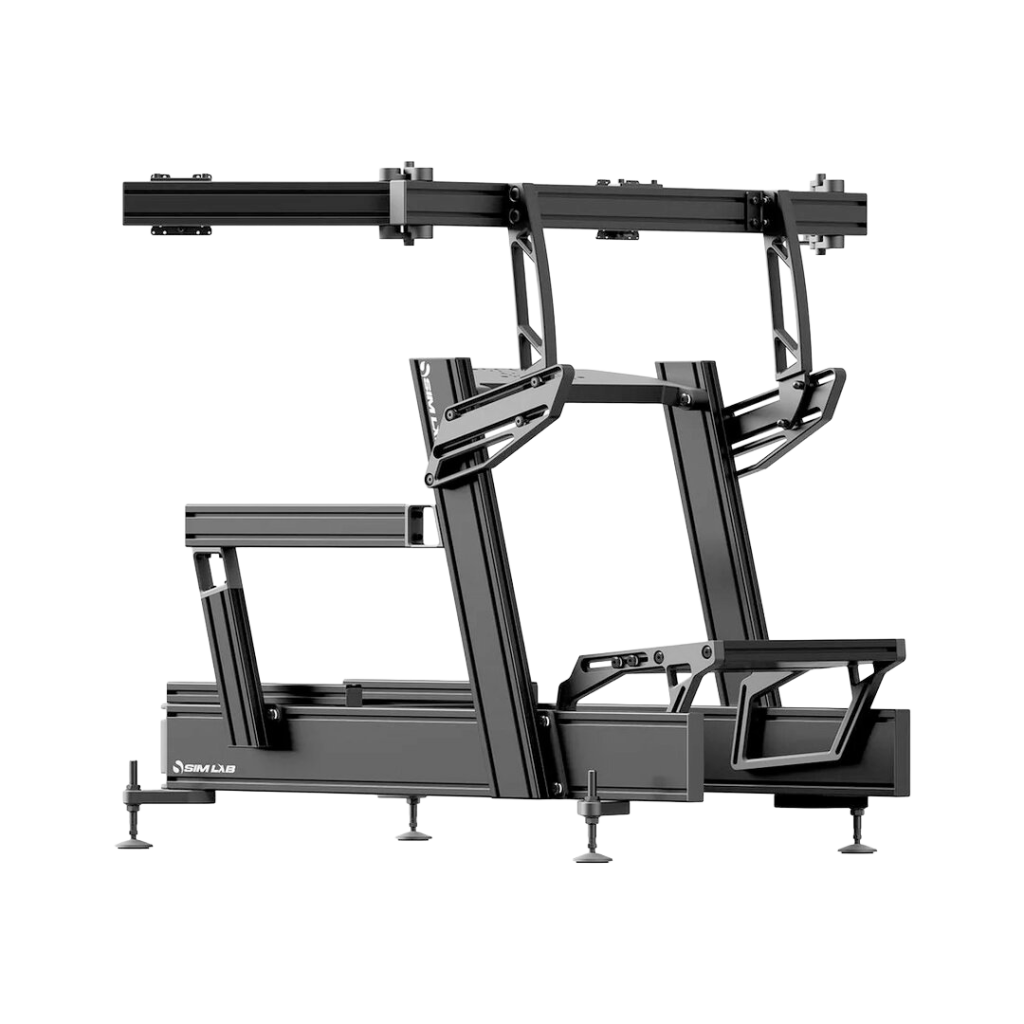
Rigs and Frames: Bolting a high-torque Direct Drive motor to a wobbly desk will completely ruin the feedback detail. A dedicated rig—usually constructed from highly rigid, modular aluminum profile (like 8020 extrusion)—ensures that zero energy is lost to flex when you aggressively brake or snap the wheel.
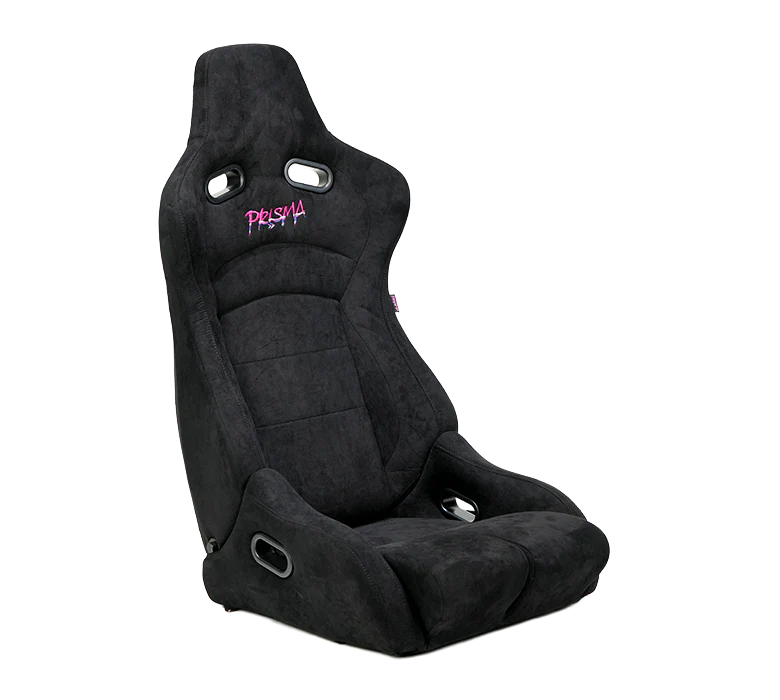
Seats: Endurance racing requires serious ergonomics. Fixed-back fiberglass bucket seats provide a rigid foundation that won’t flex when pressing a heavy load-cell brake, while offering the highly authentic seating position of a real GT3 cockpit.
The Ecosystems
Navigating the Hardware Landscape
The sim racing hardware market has exploded over the last five years, evolving from plastic desktop toys into a highly competitive industry of professional-grade motorsport equipment. When investing in a setup, drivers aren’t just buying individual parts; they are often buying into a specific brand’s ecosystem of quick-releases, proprietary software, and wheel rim compatibility. Understanding the hierarchy of these brands is crucial for building a rig that can grow with your skill level.
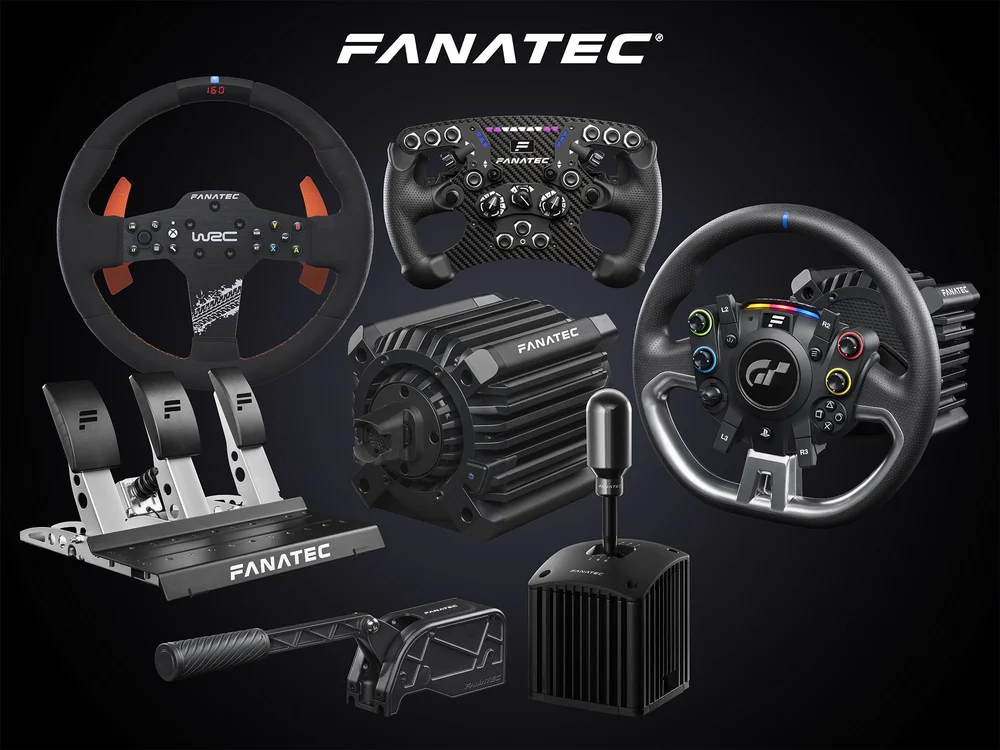
For years, the landscape was largely defined by a few legacy heavyweights. Logitech has historically been the undisputed king of the entry-level market, providing countless drivers with their first taste of force feedback through gear-driven bases, though they have recently pivoted to offer their own competitive Direct Drive options. On the other hand, Fanatec established the first massive, mainstream sim racing ecosystem. By offering an unmatched variety of officially licensed steering wheels and modular components across various price points, Fanatec became the go-to middle ground for enthusiasts, particularly those needing console compatibility.
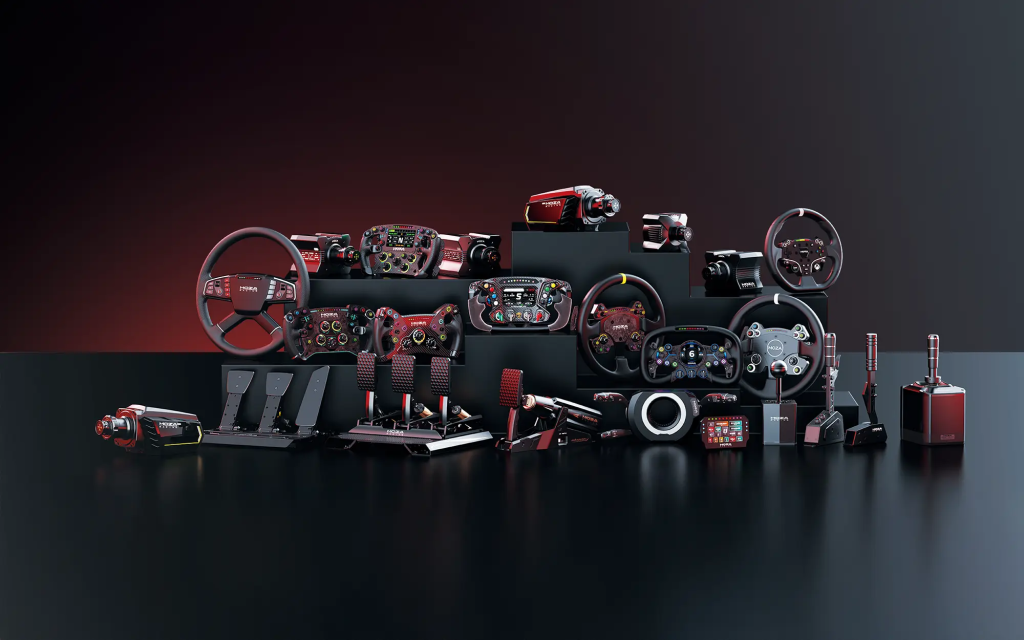
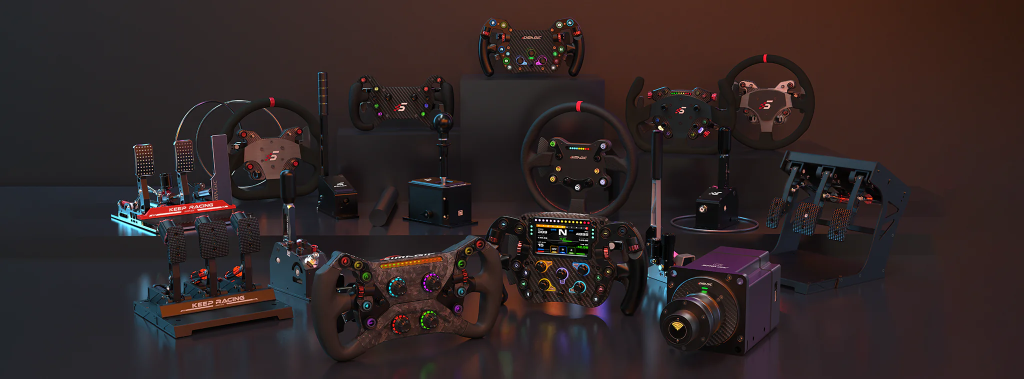
Recently, however, a wave of modern disruptors has aggressively reshaped the mid-tier and high-end markets. Brands like MOZA Racing and SIMAGIC have quickly built massive followings by offering exceptional Direct Drive bases, aerospace-grade aluminum construction, and wireless wheel rims at highly competitive price points. These companies have effectively democratized high-fidelity force feedback. Meanwhile, at the absolute pinnacle of the performance spectrum sit boutique engineering firms like Simucube and Asetek. Built with genuine motorsport DNA, these uncompromising bases produce massive amounts of torque and ultra-fine telemetry detail. They represent the endgame for professional esports competitors and real-world racing drivers utilizing simulators for off-season training.
The Visuals
The Window to the Track
While mechanical hardware dictates the tactile feel of the car, your display configuration acts as your window to the virtual track, directly impacting your depth perception, sense of speed, and ability to hit a late apex. There is no single universal solution for displays, as the ideal setup heavily depends on a driver’s available physical space and the computing power they have on hand.
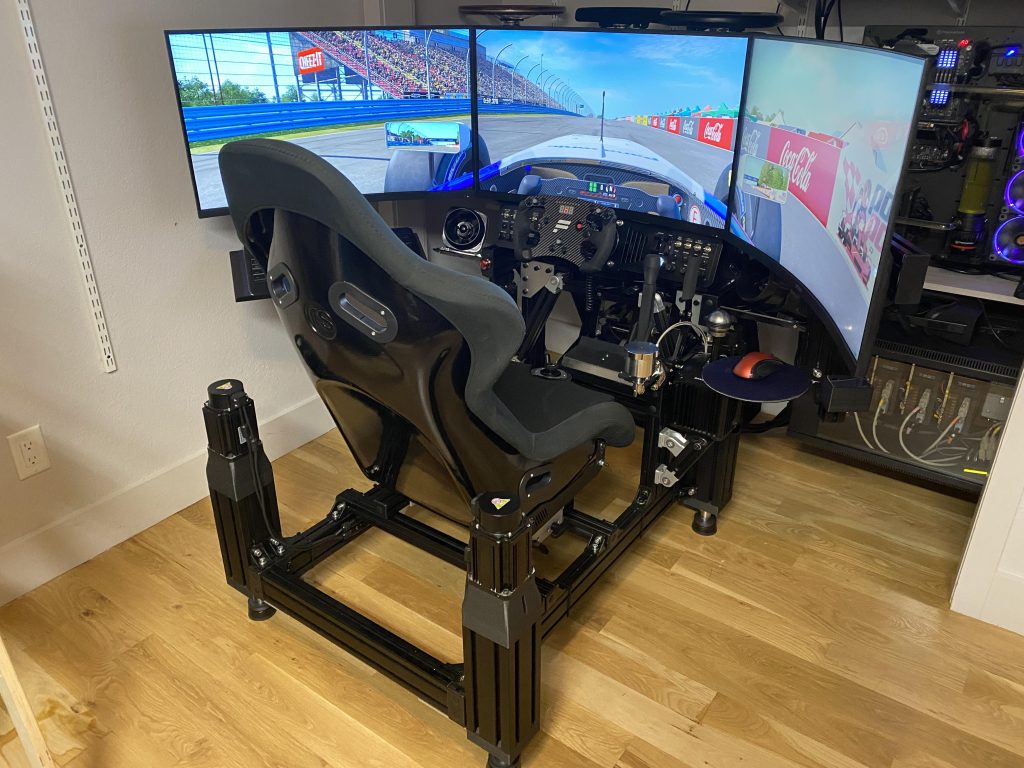
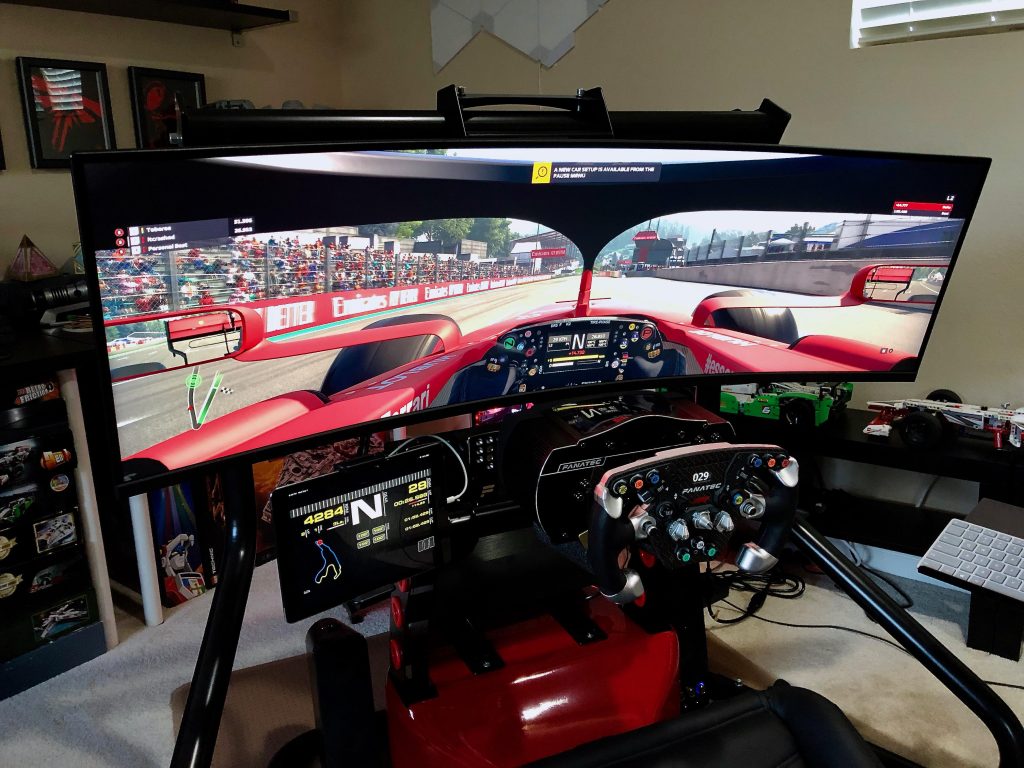
For many drivers, the journey begins with a standard, high-refresh-rate single monitor. While this is the most cost-effective and space-saving approach, a standard 16:9 screen offers a very limited Field of View (FOV). This narrow window makes it notoriously difficult to see competitors alongside you in tight corners or look ahead into a hairpin turn. To combat this without taking up an entire room, many drivers upgrade to a single ultrawide or super-ultrawide monitor. These sweeping, curved 34-inch or 49-inch panels wrap slightly around the driver’s peripheral vision, providing a massive boost to immersion and situational awareness without the headache of aligning multiple monitor bezels.
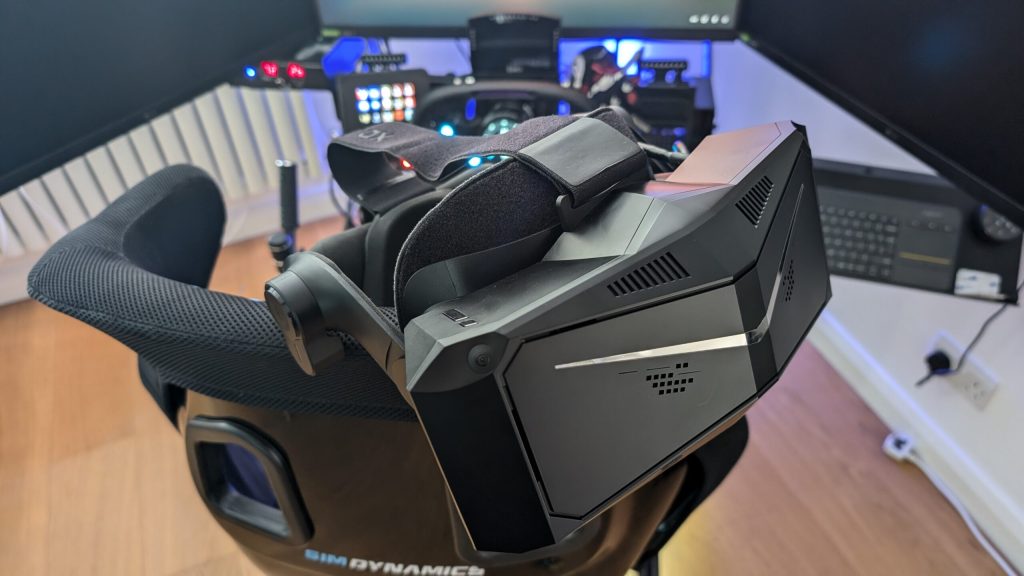
Despite the rise of massive ultrawides, the triple monitor setup remains the undisputed gold standard for professional competitive sim racing. By wrapping three identical monitors—typically 27-inch or 32-inch panels—around the cockpit, a driver achieves a perfect 180-degree field of view. This layout allows racers to physically turn their heads to look through the virtual side windows, precisely mimicking real-world spatial awareness. Finally, for those chasing ultimate, uncompromising immersion, Virtual Reality (VR) headsets offer true 3D depth perception. VR allows drivers to intuitively judge braking distances and track scale in a way that flat screens cannot replicate. However, driving a high-resolution headset at a stable framerate requires a massively powerful PC, and the physical isolation can be fatiguing during multi-hour endurance stints.
Leave a Reply