Industry Shift
Rebuilding the Grid: Why Corsair is the Ultimate Savior for Fanatec
The global sim racing landscape has been shaken to its core. Following months of financial uncertainty, corporate restructuring, and escalating customer frustration, it is now official: Corsair has finalized its acquisition of Fanatec, absorbing the troubled hardware pioneer and its assets from parent company Endor AG. For many, this marks the end of an agonizing chapter for the German manufacturer that once single-handedly defined premium simulation. But for the wider scene, Corsair’s entry is not just a hostile takeover—it is the best possible lifeline for one of the industry’s most influential, foundational brands.
Pioneering the Prosumer Market (2000–2020)
To fully appreciate why this acquisition is so monumental, you have to look back at the empire Fanatec built over two decades. In the early 2000s, the sim racing hardware market was effectively a toy aisle. The landscape was dominated by gear-driven, plastic steering wheels that were bolted to office desks, serving as little more than glorified arcade controllers.
To fully appreciate why this acquisition is so monumental, you have to look back at the empire Fanatec built over two decades. In the early 2000s, the sim racing hardware market was effectively a toy aisle. The landscape was dominated by gear-driven, plastic steering wheels that were bolted to office desks, serving as little more than glorified arcade controllers.
Fanatec, under the banner of Endor AG, saw a gap for genuine motorsport simulation. In the late 2000s, they completely disrupted the market with their Porsche-licensed wheels. They introduced smooth, powerful belt-driven force feedback to the mainstream, leaving the clunky gear-driven competitors in the dust. More importantly, in 2009, they released the original ClubSport Pedals. By bringing load-cell brake technology to the consumer market—measuring pedal pressure rather than physical travel—Fanatec fundamentally changed how sim racers built muscle memory, immediately lowering lap times across the globe.
Throughout the 2010s, Fanatec essentially invented the “prosumer” ecosystem. They launched the ClubSport Wheel Base (CSW) series, which popularized the automotive-grade quick-release system. Drivers were no longer stuck with a single plastic rim; they could hot-swap between heavy, Alcantara-wrapped GT3 wheels and carbon-fiber Formula rims in seconds.
This era peaked in 2019 when Fanatec launched the Podium Series (DD1 and DD2). Direct Drive (DD) technology—mounting a steering wheel directly to an industrial servo motor—previously required immense DIY knowledge and custom wiring. Fanatec packaged that brutal, zero-latency torque into a sleek, plug-and-play unit. By 2020, if you were a serious driver competing in top-tier endurance leagues, you owned a Fanatec. Their influence was so absolute that real-world racing series, like the GT World Challenge, signed Fanatec as their title sponsor, blurring the lines between the digital and physical grids.
A Formula for Collapse
However, as the brand’s popularity skyrocketed—especially during the massive, unprecedented global sim racing boom of 2020—their internal infrastructure began to fracture under the load. In recent years, the aspirational luster of Fanatec was completely eclipsed by a toxic mix of operational controversies and logistical failings.
The pivotal breaking point came during Black Friday 2023. The manufacturer launched aggressive, high-demand sales that overwhelmed their proprietary e-commerce system, resulting in thousands of users being charged upfront for orders that never arrived. Support forums flooded with heartbreaking stories of customers waiting six months or more for wheel bases, receiving no updates on fulfillment, and facing total silence from customer service agents.
This, combined with botched major product launches, persistent driver software bugs, and an ongoing public boardroom dispute between corporate leadership and the brand’s founder, created a perfect storm of anti-consumer chaos. The ecosystem that had once symbolized premium racing had become a trap, holding thousands of dollars of customer money hostage with no visible end in sight. The brand’s reputation was not just damaged; it was virtually non-existent.
Why Corsair is the Ideal Mechanic
It is into this hostile environment that Corsair Gaming, Inc. now steps. Many sim racing loyalists reacted with immediate cynicism, fearing that a massive, mainstream PC peripheral giant would dilute Fanatec’s hardcore engineering DNA to sell generic plastic wheels alongside keyboards and RAM.
This fear is completely unfounded. If anything, Corsair is exactly the stabilizing mechanical force that the chaotic Fanatec operation desperately needs.
Corsair is not a page-builder; they are infrastructure experts. They are a multi-billion-dollar global logistics machine that already manages several highly successful, specialized acquisitions, including Elgato (streaming gear) and SCUF Gaming (competitive controllers). In every single one of these examples, Corsair did not dismantle the brand’s core product identity; they simply fixed the boring, critical operational machinery in the background.
Corsair will not be designing Fanatec’s next motor; they will be redesigning the supply chain that delivers that motor. They bring established global warehouses, advanced inventory management software, a mature worldwide retail network, and, crucially, a world-class, responsive customer support network.
Benefiting the Long Run
The long-term benefits of this merger for the sim racing scene cannot be overstated. By absorbing Endor AG’s assets and stabilizing the brand’s finances, Corsair has ensured that millions of existing Fanatec customers will not have their current hardware become useless bricks due to a lack of software or warranty support.
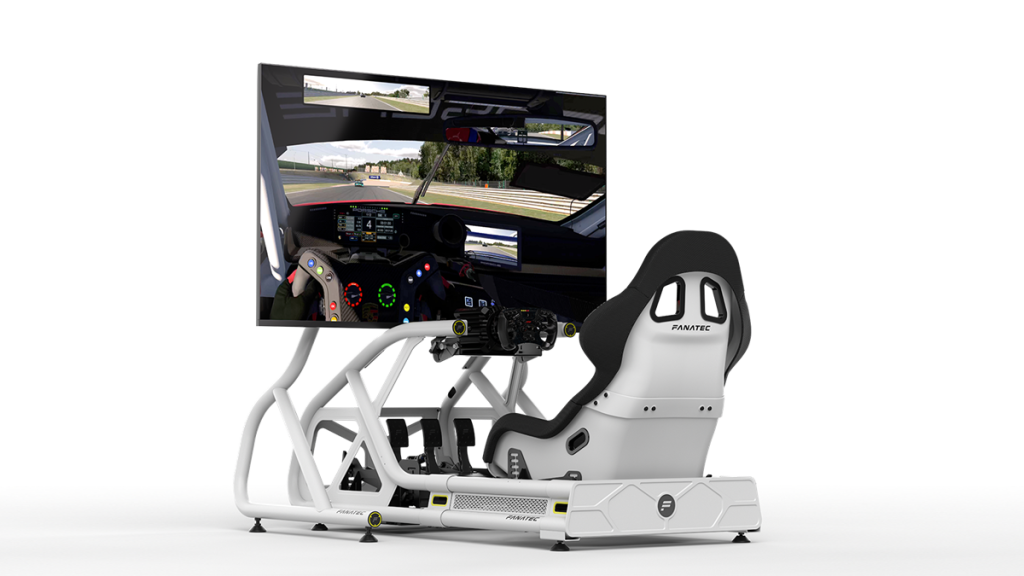
Furthermore, we are about to see a wave of aggressive development in the mid-range and high-end markets. Freed from the burden of daily financial survival and logistical nightmares, Fanatec’s brilliant engineering team can return to what they do best: designing genuine motorsport gear. Combined with Corsair’s research and development resources, we could see tighter integration with their new sim chassis, faster response to bugs, and a more streamlined product lineup.
The era of the Fanatec monopoly is over. We are entering a new, competitive era where established disruptors like MOZA and SIMAGIC must now face a fully funded, logistically sound Fanatec. In this race, the true winner is the driver.
Leave a Reply